
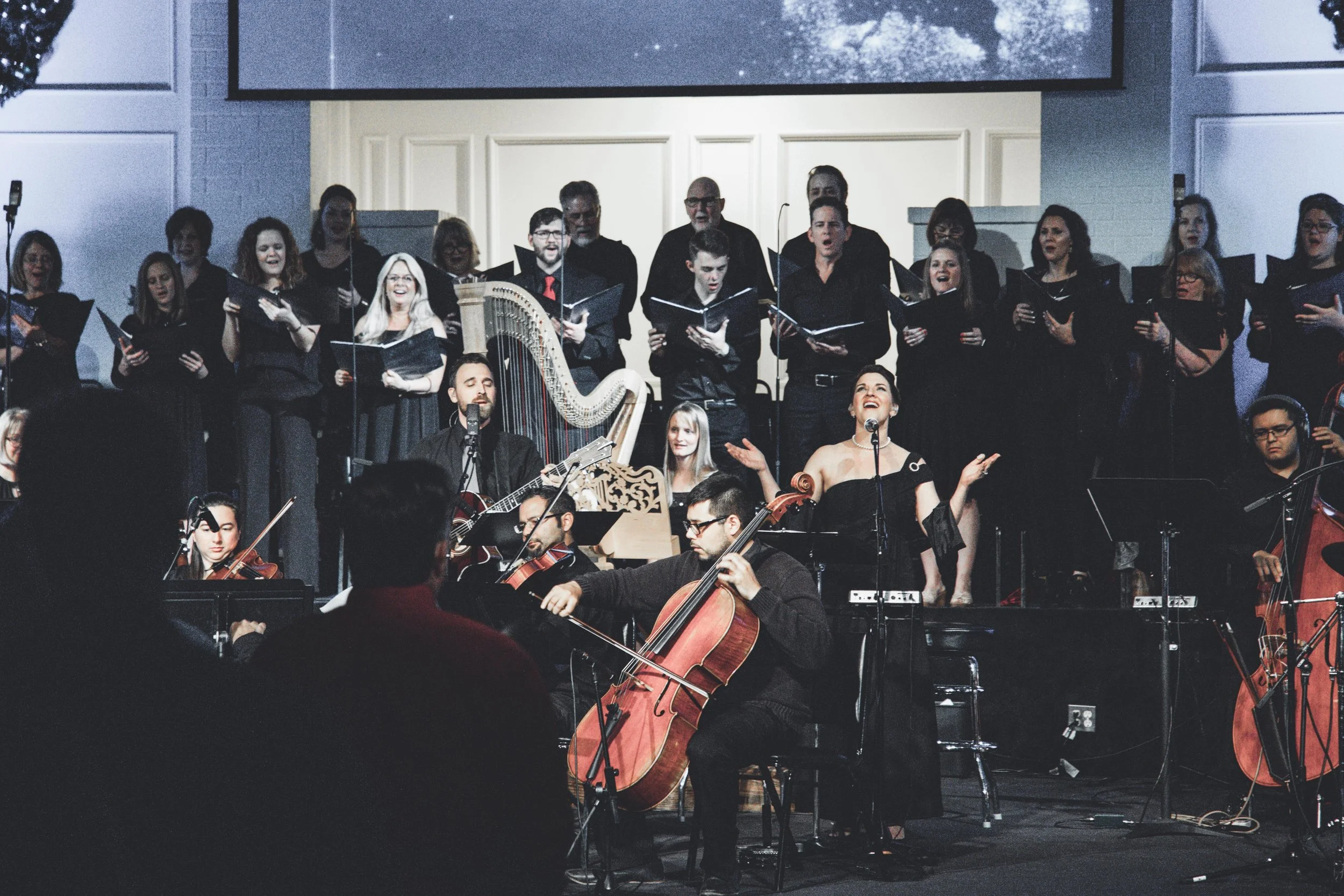
At City Church, we believe worship is more than music. Worship is the response of God’s people to who He is and what He has done. When we gather on Sunday, we worship together through Scripture, prayer, confession, singing, preaching, the historic creeds of the Church, and the Lord’s Table. Each of these practices helps tell the story of the Gospel and reminds us that we are part of something much larger than ourselves.
We also believe that worship forms us. The words we pray, confess, hear, and sing week after week become part of the way we understand God and live in His world. For that reason, we seek to shape our services as a coherent theological journey rather than simply a collection of songs and other elements. Our hope is that Sunday worship engages the heart, mind, and imagination, helping us remember what is true and teaching us to live faithfully in response to the grace of God.
We sometimes describe our approach as Ancient-Future worship. We gladly receive the wisdom and practices handed down through the historic Church—Scripture, creeds, confession, prayer, the Christian calendar, hymns, and the Eucharist—while also worshiping with the language, music, creativity, and technology of the present day. Musically, that means you may hear an ancient hymn alongside a modern worship song, or encounter sounds drawn from folk, gospel, bluegrass, jazz, or other traditions. Style is never the destination. Our goal is to choose music that is theologically faithful, beautiful, and accessible to the congregation.
Above all, we believe the congregation is the primary choir of the Church. The musicians and leaders on the platform are there to serve the singing and participation of God’s people, not to perform for them. Whether through a full band, choir and orchestra, or simply voices and an acoustic guitar, our desire is the same: to remove distractions, make room for the whole Church to participate, and turn our attention together toward Jesus Christ.
We gather to remember the Gospel, rehearse the story of God’s faithfulness, receive His grace, and then be sent back into our homes, workplaces, neighborhoods, and city to live as people who have been formed by worship.